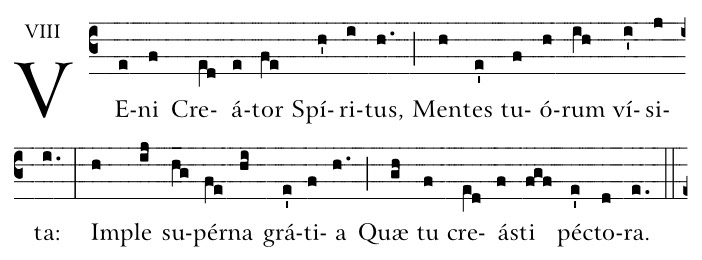
It seems potentially unjust that we are in the second year of weekly blog posts before I first reflect on a work by the giant of English Choral Music that Charles Williers Stanford undoubtedly is: giant of English Choral Music despite being Irish in origin.
Probably early works, his three motets (opus 38) are unusual in setting Latin texts rather than English. Among these, my personal favourite is the first, Justorum animae: the full text of which reads Justorum animae in manu Dei sunt, et non tanget eos tormentum malitiae. Vissi sunt oculis insipientium mori, illi autem sunt in pace (The souls of the just are in the hand of God, and the torment of malice does not touch them. They are seen by the eyes of the unwise to die, but they are in peace).
Let’s start with some notes on the text: it is attributed to the deuteron-canonical Wisdom of Solomon, the opening of the third chapter. There is nothing wrong with this attribution, but it does raise a little textual question, because the there is a difference between the text in the vulgate – the main Latin translation used historically in the Western Church – and the text as set: not only in the entirely understandable omission of the conjunction autem (but), but also in the nature of the torments described: the Vulgate gives tormentum mortis (the torment death, creating a parallelism with the appearance of death in the following verse) and Stanford has set tormentum malitiae (the torment of malice). For what it’s worth, the Septuagint (and the book was originally written in Greek) has βάσανος – apparently from an Egyptian root meaning touchstone and thence trial or test, thus torment or even torture – and the torment is not ‘of’ anything in particular except by implication.
Stanford’s text, then, comes not directly from the Latin Bible but in fact from the same text’s use in plainchant and/or Roman Catholic liturgy: it appears, in the version with malitiae, in the liber usualis as the offertory of a Mass for two or more martyrs and a gradual for the octave day of SS Peter and Paul, Apostles.
Musically, Stanford’s setting has an ABA’ structure with a short coda, in which the B section word-paints the ‘torment of malice’ with a louder dynamic, more forceful articulations, and minor-tinged chromaticism. This is, perhaps, the storm raging around each of us, from which we are sheltered by the hand of God: the A sections and the coda reflect the peace in which righteous souls are held.
Although often taken as an eschatological illustration and used at funerals, I wonder whether the torments of malice are much more present in the age we occupy; how does God shelter us in his hands even among our current troubles? How much more, though, in the age to come?
 Theology in Music
Leave a comment